Gemini Answer
Gemini answer
Prompt engineer :
Wadï Mami
E-mail : wmami@steg.com.tn/ didipostman77@gmail.com
Date : 22 juillet 2026 à 16:06
Spring batch as a
model for Crispr Cas9
The concept of using Spring Batch as a model for CRISPR-Cas9 is a
fascinating, highly creative interdisciplinary analogy proposed by tech
researchers and software architects (most notably documented in conceptual
literature by Wadï Mami).
ResearchGate
It bridges enterprise
software engineering with molecular biology by treating the genome as a
massive database and the CRISPR-Cas9 complex as a fault-tolerant batch
processing job.
ResearchGate
The Conceptual Mapping
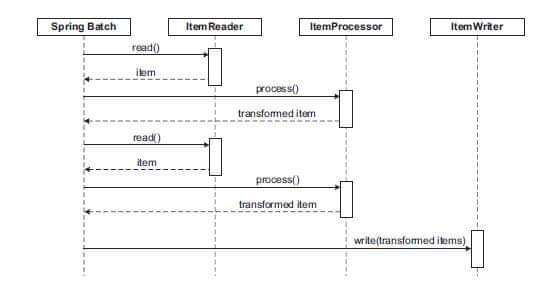
Spring Batch relies on
a standard architecture: ItemReader → ItemProcessor → ItemWriter. When mapped to the
molecular mechanics of CRISPR-Cas9, the components translate beautifully:
Spring Batch Pipeline:
[ ItemReader ] ------->
[ ItemProcessor ]
-------> [ ItemWriter ]
| | |
CRISPR-Cas9 Equivalent: | |
gRNA Scanning Cas9 Cleavage & DNA Repair Mechanics
& PAM Recognition Mismatch Validation (NHEJ / HDR Pathways)
1. ItemReader (The gRNA Scanning Mechanism)
In Spring Batch, the
reader streams data piece by piece (or chunk by chunk) from a database.
·
Biological Mapping: The Guide RNA (gRNA)
bound to the Cas9 enzyme acts as the ItemReader. It moves along the
DNA strand, reading nucleotide base pairs looking for a specific matching
sequence adjacent to a Protospacer Adjacent Motif (PAM).
2. ItemProcessor (The Cleavage Decision)
The processor filters,
validates, or transforms data. If an item fails validation, the step can skip
it or throw an error.
·
Biological Mapping: Once the gRNA finds a
potential match, the Cas9 enzyme attempts to bind and verify the match. If
there is a mismatch, the "step" is skipped (off-target mitigation).
If it is a perfect match, the processor executes its primary function:
triggering a double-strand break (cleavage) at a precise location.
3. ItemWriter (DNA Repair Pathways)
The writer commits the
modified data back to the database in a transaction block.
·
Biological Mapping: Once Cas9 cuts the
DNA, the cell's natural repair machinery takes over as the ItemWriter. It writes changes
back to the genome using either NHEJ (Non-Homologous End Joining, which
often knocks out the gene) or HDR (Homology-Directed Repair, which
writes in a specific new template).
Why this Analogy is Valuable
While a living cell
relies on complex stochastic (random) biophysics and fluid chemical dynamics
rather than digital logic, mapping CRISPR to a batch pipeline serves several
powerful purposes:
Chunking and Transactions
Spring Batch handles
data in structured "chunks" to save memory and ensure transactional
integrity (if a chunk fails, it rolls back). In genetic engineering, thinking
of genomic regions as transactional chunks helps bioinformaticians design safer
guide RNAs by simulating exactly how many downstream "records"
(genes) might be affected by an edit.
ResearchGate
Fault Tolerance & Skip Logic
One of Spring Batch’s
strongest features is its ability to handle bad data gracefully using skip or retry mechanics. In CRISPR
simulations, this model is highly effective for coding off-target effect
rules:
·
Skip Policy: If a DNA segment has
a high number of mismatches, the simulation logic "skips" the cut,
mimicking how Cas9 detaches without cleaving.
·
Retry / Repair: If a cell incorrectly
repairs a cut, the gRNA may bind and try to cut it again—a biological
"retry listener."
Scale in Drug Discovery
When screening the
entire genome for drug targets, scientists deal with terabytes of sequencing
data. Designing computational CRISPR pipelines inside a framework like Spring
Batch allows developers to scale bioinformatics tools across distributed cloud
clusters using familiar parallel processing patterns (like Master/Slave
partitioning).
A Quick Reality Check: This is a high-level algorithmic model. In a real
cell, there are no structural boundaries, loops, or digital logs; Cas9 is
driven by thermal energy, kinetic binding laws, and molecular vibrations.
However, translating these erratic biological events into deterministic
software steps makes gene-editing simulations vastly easier to design, debug,
and scale.
Would you like to see a conceptual Java/Spring Batch code snippet
simulating a CRISPR edit?
Oui
Show me a conceptual Java code example mapping Spring Batch's ItemReader,
ItemProcessor, and ItemWriter to a CRISPR-Cas9 DNA editing sequence.
Here is a conceptual implementation of how you can map the Spring Batch
architecture to a CRISPR-Cas9 genetic editing pipeline.
This example uses a
chunk-based processing model where the genome is streamed, validated against a
guide RNA (gRNA), cleaved if it matches, and then written back using
a cellular repair template.
Java
import org.springframework.batch.item.ItemReader;
import org.springframework.batch.item.ItemProcessor;
import org.springframework.batch.item.ItemWriter;
import org.springframework.batch.item.Chunk;
import java.util.List;
import java.util.Arrays;
/**
* Domain model representing a short segment of
DNA.
*/
class DnaSegment {
private final String sequence; //
e.g., "ATCG..."
private boolean isCleaved = false;
private String modification = "Unmodified";
public DnaSegment(String sequence) {
this.sequence = sequence;
}
public String getSequence() { return sequence; }
public boolean isCleaved() { return isCleaved; }
public void cleave() { this.isCleaved = true; }
public String getModification() { return modification; }
public void setModification(String modification) { this.modification = modification; }
@Override
public String toString() {
return String.format("[%s | Cleaved: %b | State:
%s]", sequence, isCleaved, modification);
}
}
//
==========================================
//
1. THE ITEM READER (gRNA Scanning & PAM)
//
==========================================
class DnaStreamReader implements ItemReader<DnaSegment> {
private final List<String> genomeSequenceStream;
private int index = 0;
public DnaStreamReader(List<String> mockGenome) {
this.genomeSequenceStream = mockGenome;
}
@Override
public DnaSegment read() {
// Stream the genome chunk by chunk, reading 23-base
pair segments
if (index < genomeSequenceStream.size()) {
String nextSegment =
genomeSequenceStream.get(index++);
return new DnaSegment(nextSegment);
}
return null; //
Signals End of Dataset (EOS) to Spring Batch
}
}
//
==========================================
//
2. THE ITEM PROCESSOR (Cas9 Mismatch Validation)
//
==========================================
class Cas9Processor implements ItemProcessor<DnaSegment, DnaSegment> {
private final String targetSequence; // The gRNA sequence target
public Cas9Processor(String targetSequence) {
this.targetSequence = targetSequence;
}
@Override
public DnaSegment process(DnaSegment item) throws Exception {
// Mismatch skip logic: Simulate how
strictly the Cas9 binds
int mismatches = calculateMismatches(item.getSequence(),
targetSequence);
if (mismatches > 3) {
// Spring Batch Skip Logic: Returning null
skips this item from being passed to the Writer
System.out.println("
[Cas9] Off-target detected (" + mismatches + " mismatches). Skipping segment: " + item.getSequence());
return null;
}
// Perfect or near-perfect match: Execute
double-strand break (Cleavage)
System.out.println("
[Cas9] Target Match Confirmed! Cleaving segment: " + item.getSequence());
item.cleave();
return item;
}
private int calculateMismatches(String seq1, String seq2) {
int minLength = Math.min(seq1.length(), seq2.length());
int count = 0;
for (int i = 0; i < minLength; i++)
{
if (seq1.charAt(i) != seq2.charAt(i)) count++;
}
return count + Math.abs(seq1.length() - seq2.length());
}
}
//
==========================================
//
3. THE ITEM WRITER (DNA Repair Pathways)
//
==========================================
class DnaRepairWriter implements ItemWriter<DnaSegment> {
private final String repairTemplate; // Used for Homology-Directed Repair (HDR)
public DnaRepairWriter(String repairTemplate) {
this.repairTemplate = repairTemplate;
}
@Override
public void write(Chunk<? extends DnaSegment> chunk) throws Exception {
// Spring Batch commits items in
transactional blocks (Chunks)
System.out.println("\n>> Cellular Repair
Machinery (ItemWriter) executing transactional write for chunk...");
for (DnaSegment segment : chunk.getItems()) {
if (segment.isCleaved()) {
// Emulating Homology-Directed Repair (HDR)
to rewrite the sequence
segment.setModification("Successfully edited with template: " + repairTemplate);
System.out.println(" Committed to Genome: " + segment);
}
}
}
}
//
==========================================
//
PIPELINE SIMULATION EXECUTION
//
==========================================
public class CrisprBatchSimulation {
public static void main(String[] args) throws Exception {
// Mocking a tiny stream of genomic data
(Target is ATCGATCGATCGATCGATCG)
List<String>
mockGenomeStream = Arrays.asList(
"ATCGATCGATCGATCGATCG", // 1. Perfect Match
"GGGGGGGGGGGGGGGGGGGG", // 2. Total Mismatch (Should be skipped)
"ATCGATCGATCGATCGATCA", // 3. 1 Mismatch (Near match, will still cut)
"TTTTTTTTTTTTTTTTTTTT" // 4. Total Mismatch (Should be skipped)
);
String gTarget = "ATCGATCGATCGATCGATCG";
String hdrTemplate = "REPLACED_GENE";
// Instantiating our Spring Batch steps
manually for representation
DnaStreamReader reader = new DnaStreamReader(mockGenomeStream);
Cas9Processor processor = new Cas9Processor(gTarget);
DnaRepairWriter writer = new DnaRepairWriter(hdrTemplate);
System.out.println("Starting CRISPR-Cas9 Spring Batch Simulation...\n");
// Simulating the Batch Lifecycle Loop
Chunk<DnaSegment>
writeChunk = new Chunk<>();
DnaSegment currentSegment;
while ((currentSegment = reader.read()) != null) {
DnaSegment
processedSegment = processor.process(currentSegment);
if (processedSegment != null) {
writeChunk.add(processedSegment);
}
}
// If we have verified, processed (cut)
segments, we commit them via the Writer
if (!writeChunk.isEmpty()) {
writer.write(writeChunk);
}
System.out.println("\nBatch Job Completed.");
}
}
Key Architectural Notes on This Code:
·
Transactional Boundaries: In a standard Spring
Batch framework configuration, if an exception happens during the ItemWriter execution, the whole
chunk rolls back. In a biological setting, this mirrors the cell's demand for
high-fidelity repair—if the cell cannot resolve the break cleanly (or if it
encounters a lethal mutation), the cell triggers apoptosis (programmed cell
death), effectively dropping the entire chunk.
·
Filter/Skip Semantics: Notice how the Cas9Processor returns null when a sequence has
too many mismatches. In Spring Batch, returning null tells the framework
to intentionally ignore that record and move directly to the next read() operation without
throwing a fatal exception. This perfectly models the biological behavior of
Cas9 dynamically unbinding from non-target DNA.

Comments
Post a Comment