A human perception done by Google mode AI about Spring Batch as a model for CRISPR Cas9
Bridging Software Architecture and Molecular Biology: The CRISPR-Cas9 Spring Batch Model
The intersection of enterprise software engineering and molecular biology offers powerful conceptual frameworks for understanding complex systems. A notable example of this interdisciplinary mapping is the model proposed by software architect Wadï Mami, which treats the genome as a massive database and the CRISPR-Cas9 complex as a fault-tolerant batch processing job. By examining the biological mechanisms of gene editing through the lens of Spring Batch architecture, researchers can build more deterministic, scalable computational simulations for bioinformatics and drug discovery.
The Architectural Mapping
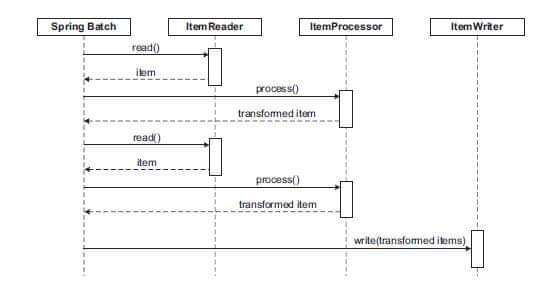
Spring Batch relies on a standard three-stage pipeline: reading data, processing it, and writing the results back to a database. When applied to the molecular mechanics of CRISPR-Cas9, these software components correspond directly to specific biological actions.
1. ItemReader and gRNA Scanning
In enterprise software, an ItemReader streams data chunk by chunk from a source to optimize memory usage. In the biological analogy, the Guide RNA (gRNA) bound to the Cas9 enzyme functions as the Reader. It systematically moves along the DNA strand, scanning nucleotide base pairs sequentially to locate a target sequence adjacent to a Protospacer Adjacent Motif (PAM).
2. ItemProcessor and Cas9 Cleavage
The ItemProcessor is responsible for filtering, validating, or transforming data. If an item fails validation rules, the processor can skip it or halt execution. Biologically, once the gRNA identifies a potential match, the Cas9 enzyme attempts to bind and verify the sequence. If a significant mismatch is detected, the segment is intentionally skipped to mitigate off-target effects. If a perfect or near-perfect match occurs, validation succeeds, and the processor triggers its primary operation: a double-strand break (cleavage) at the precise target location.
3. ItemWriter and DNA Repair Pathways
The ItemWriter commits modified records back to the database within a transactional block. After Cas9 cuts the DNA, the cell's natural repair machinery takes over the role of the Writer. It writes the modifications back to the genome using either Non-Homologous End Joining (NHEJ), which typically knocks out the gene, or Homology-Directed Repair (HDR), which inserts a specific new template sequence.
System Design and Operational Dynamics
Mapping these biological events to a structured software framework introduces critical concepts from data engineering into genomic simulations.
Transactional Boundaries and Apoptosis
In standard Spring Batch configurations, an unhandled exception during the writing stage triggers a rollback to ensure data integrity. In cellular biology, this mirrors the high-fidelity constraints of genetic repair. If the cell cannot resolve a double-strand break cleanly or encounters a lethal mutation during the repair phase, it triggers apoptosis (programmed cell death). This biological response effectively discards the corrupted "chunk" to preserve the organism's broader genomic stability.
Fault Tolerance and Skip Policies
Spring Batch handles sub-optimal data gracefully through robust skip and retry mechanics. In a computational CRISPR simulation, this logic efficiently models off-target effects. If a DNA segment exhibits a high number of mismatches, the simulation's skip policy bypasses the cleavage step, mimicking how Cas9 detaches without cutting. Conversely, if a cell incorrectly repairs a cut, the gRNA may bind and attempt to cleave the site again, acting as a biological retry listener.
Scale in Computational Biology
While a living cell operates on complex stochastic biophysics, fluid chemical dynamics, and thermal energy rather than strict digital logic, translating these erratic events into deterministic software steps offers significant advantages.
When screening entire genomes for drug targets, bioinformaticians handle terabytes of sequencing data. Designing pipelines within an established enterprise framework like Spring Batch allows developers to scale simulations across distributed cloud clusters. By utilizing familiar parallel processing patterns, such as master-worker partitioning, researchers can accelerate target discovery and build highly scalable, easily debugged genetic engineering simulations.
If you would like to explore this concept further, let me know if you want to review the raw Java code implementation of this pipeline or if you would like to focus on expanding a specific biological phase like the off-target skip policy.
-- Minds, like parachutes, function best when open. ,,,
(o o)/ --------oOO--(_)--OOo--------------------\
| Wadï Mami didipostman
| Github : https://www.github.com/didipostman
| e-mail : wmami@steg.com.tn / didipostman77@gmail.com
| ----------------------------------------/

Comments
Post a Comment