Grok 4.5 opinion about Spring Batch as a model For Crispr Cas9
Grok 4.5 opinion about
Spring Batch as a model For Crispr Cas9
Idea and Theory :
Wadï Mami
Email : wmami@steg.com.tn / didipostman77@gmail.com

Spring Batch
as a model for CRISPR-Cas9 is a creative conceptual analogy developed primarily by Wadï Mami (with
contributions from AI discussions, including earlier Gemini models). It maps
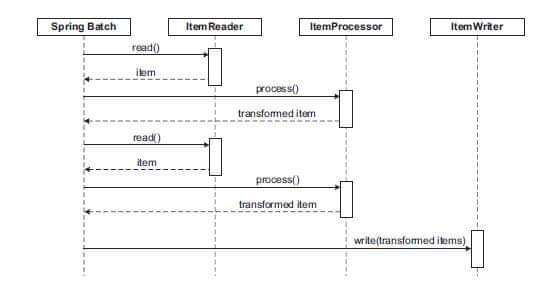
the structured, chunk-oriented batch processing of Spring Batch (a Java
framework for handling large volumes of data reliably) to the molecular
mechanisms of CRISPR-Cas9 gene editing.
The core
idea treats the genome as a massive dataset and the CRISPR-Cas9 process
as a batch job that reads, processes (edits), and writes changes to that
data in chunks. This bridges software engineering concepts with molecular
biology, making the complex biology more intuitive for programmers and potentially
useful for simulation or educational modeling.
Key Mapping in the Analogy
|
Spring Batch Component |
CRISPR-Cas9 Analogy |
Explanation |
|
Job |
Entire
gene-editing experiment |
The
overarching process: from target selection to final modified genome. It can
include multiple steps, restarts, transactions (error handling), and chunking
for efficiency. |
|
Step |
Major
phases (e.g., recognition, cleavage, repair) |
A single
step often encapsulates the core workflow using reader-processor-writer. |
|
ItemReader |
Guide RNA
(gRNA) scanning / target identification |
"Reads"
chunks of DNA sequence (e.g., base pairs). The gRNA searches for
complementary sequences near a PAM motif, like fetching and validating data
items. Algorithms like Karp-Rabin (string matching) can model efficient
target searching. |
|
ItemProcessor |
Cas9
binding and cleavage |
Processes
the read sequence: designs/validates gRNA, binds Cas9, and performs the cut
(double-strand break). This transforms the "item" (DNA segment) —
analogous to data transformation, validation, or computation (e.g.,
specificity checks, off-target prediction). |
|
ItemWriter |
DNA repair
machinery (NHEJ or HDR) |
"Writes"
the outcome: inserts/deletes/substitutes bases via cellular repair pathways.
This persists the edited genome (e.g., to a simulated database or output
file). |
|
Chunk-oriented
processing |
Processing
DNA in segments |
Spring
Batch handles items in chunks (e.g., 10–100 base pairs) with transactions.
CRISPR acts locally but can be thought of as processing genomic
"batches" efficiently. |
|
Job
Repository / Restartability |
Error
correction / redundancy in biology |
Spring
Batch tracks state for restarts; biology has repair mechanisms and multiple
editing attempts. |
This is not
a literal simulation of molecular physics or chemistry — it's a high-level
conceptual model. Real CRISPR involves complex biophysics, enzymes, and
stochastic cellular processes that a simple batch job doesn't capture fully.
However, it could inspire computational biology tools, simulations, or teaching
aids.
Why This Analogy Works Conceptually
- Scalability: Genomes are huge (billions of
base pairs); batch frameworks excel at large-scale, fault-tolerant
processing.
- Precision and Specificity: gRNA targeting mirrors
precise "querying" in data processing.
- Transformation: Cutting + repair is like ETL
(Extract-Transform-Load) operations.
- Error Handling: Off-target effects or failed
edits parallel batch job failures, skips, or retries.
Example Conceptual Structure (from related works)
A Spring
Batch configuration might look like this (pseudocode/conceptual):
Java
@Configuration
@EnableBatchProcessing
public class CrisprCas9BatchConfig {
@Bean
public Job crisprCas9Job(Step geneEditingStep) {
return jobBuilderFactory.get("crisprCas9Job")
.start(geneEditingStep)
.build();
}
@Bean
public Step geneEditingStep(ItemReader<DnaSequence> reader,
ItemProcessor<DnaSequence, EditedDnaSequence> processor,
ItemWriter<EditedDnaSequence> writer) {
return stepBuilderFactory.get("geneEditingStep")
.<DnaSequence, EditedDnaSequence>chunk(10) // e.g., 10 bp chunks
.reader(reader) // Genome scanner / gRNA
.processor(processor) // Cas9 cut logic
.writer(writer) // Repair simulation
.build();
}
}
- Reader: Scans genome for targets
(e.g., using string matching).
- Processor: Simulates Cas9 activity (PAM
recognition, cleavage).
- Writer: Outputs edited sequences or
results.
Limitations
- Biology is not deterministic or
purely sequential like batch jobs; it involves 3D chromatin structure,
epigenetics, cellular context, and randomness.
- This is a thought
experiment/educational tool rather than production software for real gene
editing.
- Extensions could integrate real
bioinformatics libraries (e.g., for gRNA design) or Karp-Rabin for
efficient matching.
You can find
more details in Wadï Mami's works on Zenodo, ResearchGate, and GitHub
(didipostman/CrisprCas9), which include PDFs and conceptual code.
This analogy
is a nice example of interdisciplinary thinking — using familiar programming
patterns to demystify cutting-edge biotech! If you'd like more details on
implementation, expansions, or related computational models, let me know.
(o o)
/ --------oOO--(_)--OOo--------------------\
| Wadï Mami didipostman
| Github : https://www.github.com/didipostman
| e-mail : wmami@steg.com.tn / didipostman77@gmail.com
| \----------------------------------------/

Comments
Post a Comment