Spring Batch as a model for CRISPR-Cas9
Spring Batch as a model for
CRISPR-Cas9
Idea and Theory : Wadï Mami
e-mail : wmami@steg.com.tn / didipostman77@gmail.com
The proposal of Spring Batch as a model for
CRISPR-Cas9 is a conceptual framework that maps the biological steps of
gene editing to the structured workflow of a software batch processing
framework. This analogy, pioneered by researcher Wadï Mami, treats the
genome as a large dataset and the CRISPR process as a "job" composed
of discrete, repeatable steps. [1, 2, 3, 4]
The Core Analogy (ETL Workflow)
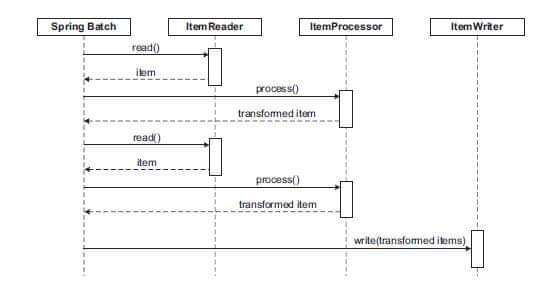
The model leverages Spring Batch’s standard Reader-Processor-Writer
architecture to represent the molecular mechanism of CRISPR-Cas9: [1, 5]
|
Spring
Batch Component [2, 3, 4, 5, 6, 7] |
Biological
Counterpart |
Function |
|
ItemReader |
Target
Identification |
Fetches
DNA sequences from the genome (source data). |
|
ItemProcessor |
gRNA
Design & Binding |
Uses
algorithms (like Karp-Rabin) to design guide RNA and simulate Cas9
binding to the target. |
|
ItemWriter |
Cleavage
& Repair |
Simulates
the physical "cutting" of DNA and the cellular repair (NHEJ or HDR)
that "writes" the final edit. |
Technical Implementation Highlights
Researchers have developed conceptual code to
illustrate this model, focusing on automation and scalability for
bioinformatics: [1]
- Pattern Matching: The model often uses the Karp-Rabin
algorithm within the ItemProcessor to efficiently locate specific DNA patterns (PAM
sequences) across massive genomic datasets.
- Chunk-Oriented Processing: This allows for the
simultaneous processing of thousands of potential target sites, mimicking
high-throughput laboratory screening.
- Error Handling: Spring Batch’s
"Skip" and "Retry" mechanisms are used to model
biological uncertainties, such as off-target effects or failed
cellular repairs.
- Job Repository: Metadata stored in the JobRepository acts like a digital lab
notebook, tracking every "experiment" (execution) for reproducibility.
[1, 2, 3, 4, 5, 8]
Scientific Context and Limitations
While this is a powerful educational and research
tool for organizing bioinformatics pipelines, it is important to note:
- Conceptual Nature: Most current implementations
are simulations or informatics models rather than real-time molecular
interaction engines.
- Static vs. Dynamic: Spring Batch is a linear,
programmed workflow, whereas CRISPR in living systems involves complex,
non-linear dynamics and real-time biological feedback.
- Interdisciplinary Impact: The model aims to bridge the
gap between Java architects and bioinformaticians, providing
a standardized framework for drug discovery and genetic disease research.
[1, 6, 8, 9, 10]
[1] https://www.researchgate.net
[2] https://www.researchgate.net
[4] https://www.researchgate.net
[7] https://lifesciences.danaher.com
[8] https://www.researchgate.net
[9] https://www.researchgate.net
[10] https://www.frontiersin.org

Comments
Post a Comment